
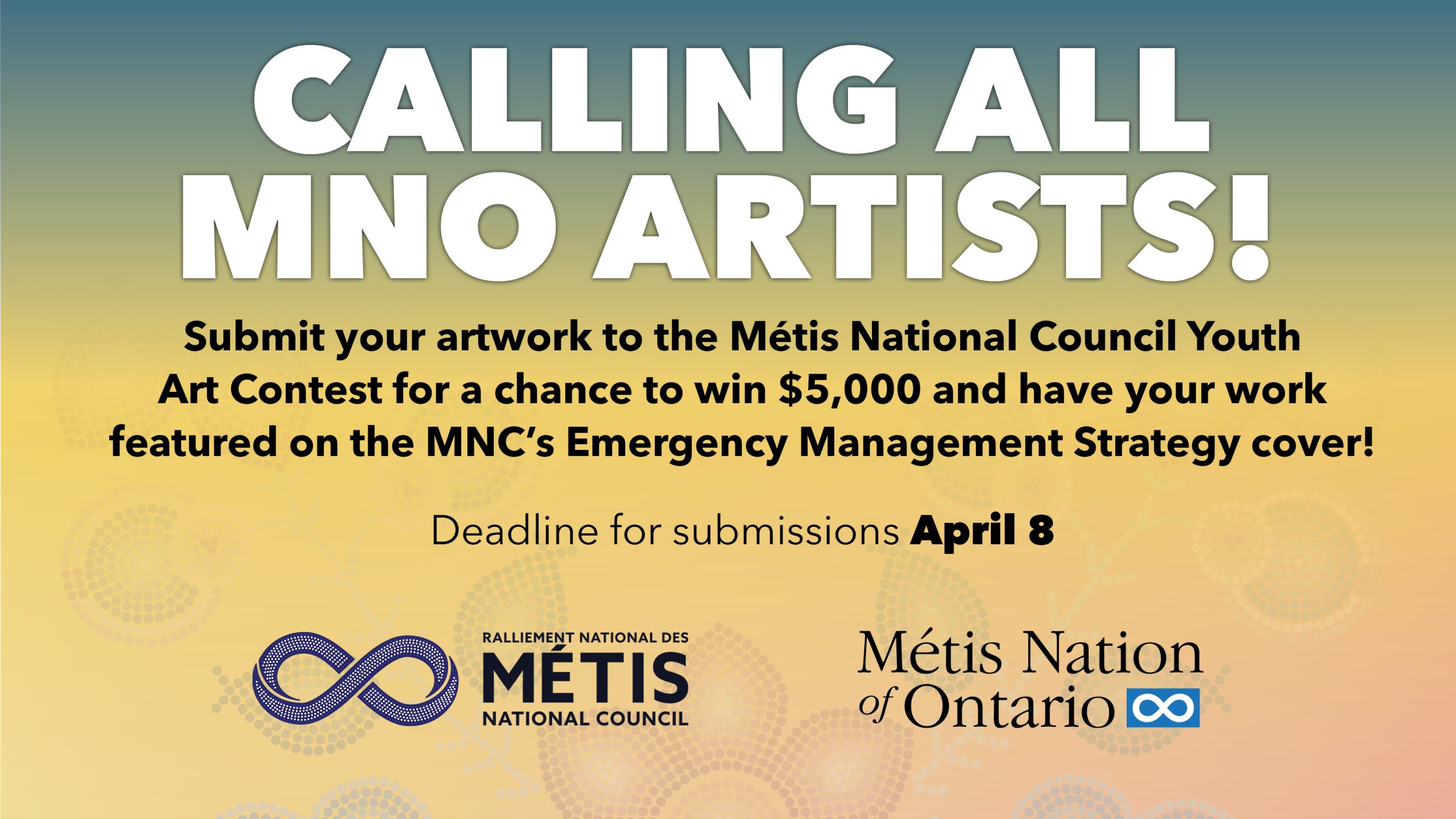
Métis youth under 30—share your creativity!
The Métis National Council is inviting submissions for its Youth Art Contest, with the winning piece featured on the cover of the upcoming Emergency Management Strategy.
The grand prize includes $5,000 and cover placement, while the runner-up receives an iPad and AirPods.
Artwork can be submitted in any still medium, including painting, photography, beadwork, digital art, drawing, and more. A short essay explaining the piece is also required.
The deadline for submissions is April 8, 2026. Submit your art at contest@metisnation.ca

MNO Emergency Management Guidelines
- A situation or an impending situation that constitutes a danger of major proportions that could result in serious harm to persons or substantial damage to property and that is caused by the forces of nature, a disease or other health risk, an accident or an act whether intentional or otherwise
- Emergency management is the ongoing process of preventing, planning for, responding to, and recovering from emergencies
- Prevention: Actions taken to prevent or reduce the impact of disasters
- Preparedness: Policies, programs, and plans developed before a crisis to ensure an effective response to a disaster
- Response: Actions taken during and immediately after a disaster to protect lives and property
- Recovery: Efforts to rebuild and restore after a disaster, including long-term support and identifying lessons learnt
- Fire in your community or immediate medical assistance: 911
- Reporting a wildfire: 310-FIRE (3473)
- Information on road closures and conditions: 511
Provincial Financial Assistance
Federal Financial Assistance
- Disaster Assistance Programs – Federal programs by Topic
- Help for individuals affected by hazardous weather and natural disasters
Food Insecurity Assistance
- ONE MNO Navigators
- Please reach out to One MNO at: 1-800-263-4889 Ext. 7 or email us at: ContactUs@metisnation.org
Wildfire Preparedness
- Wildfires: Before, During & After
- Wildfire Smoke and Health
- Build cost effective air filter
- Air Purifier to improve indoor Air
- Three Steps to WildFIRE Smart Home
Preparedness Tools
- Emergency Preparedness
- Emergency preparedness in high-rise buildings
- Fire Insurance
- Ensure everyone’s safety during an emergency
- Create an Emergency Plan
Extreme Heat Preparedness
Flood Preparedness
MNO Emergency Management Newsletter
Learn more about to the new quarterly Emergency Prevention and Preparation newsletter, designed to help support citizens prepare for emergencies before they happen – thus transforming potential emergencies into relatively controlled and planned-for events.